


Tóm Tắt Nội Dung Bài Viết
Are you preparing for the Countryside topic in IELTS Speaking? This article from ECE, professionally reviewed by IELTS instructor Nguyen Phan Hai (8.0 IELTS), provides you with essential vocabulary, high-scoring sentence structures, and detailed sample answers for all three parts of the test. Let’s dive in and get ready to conquer this topic with confidence!
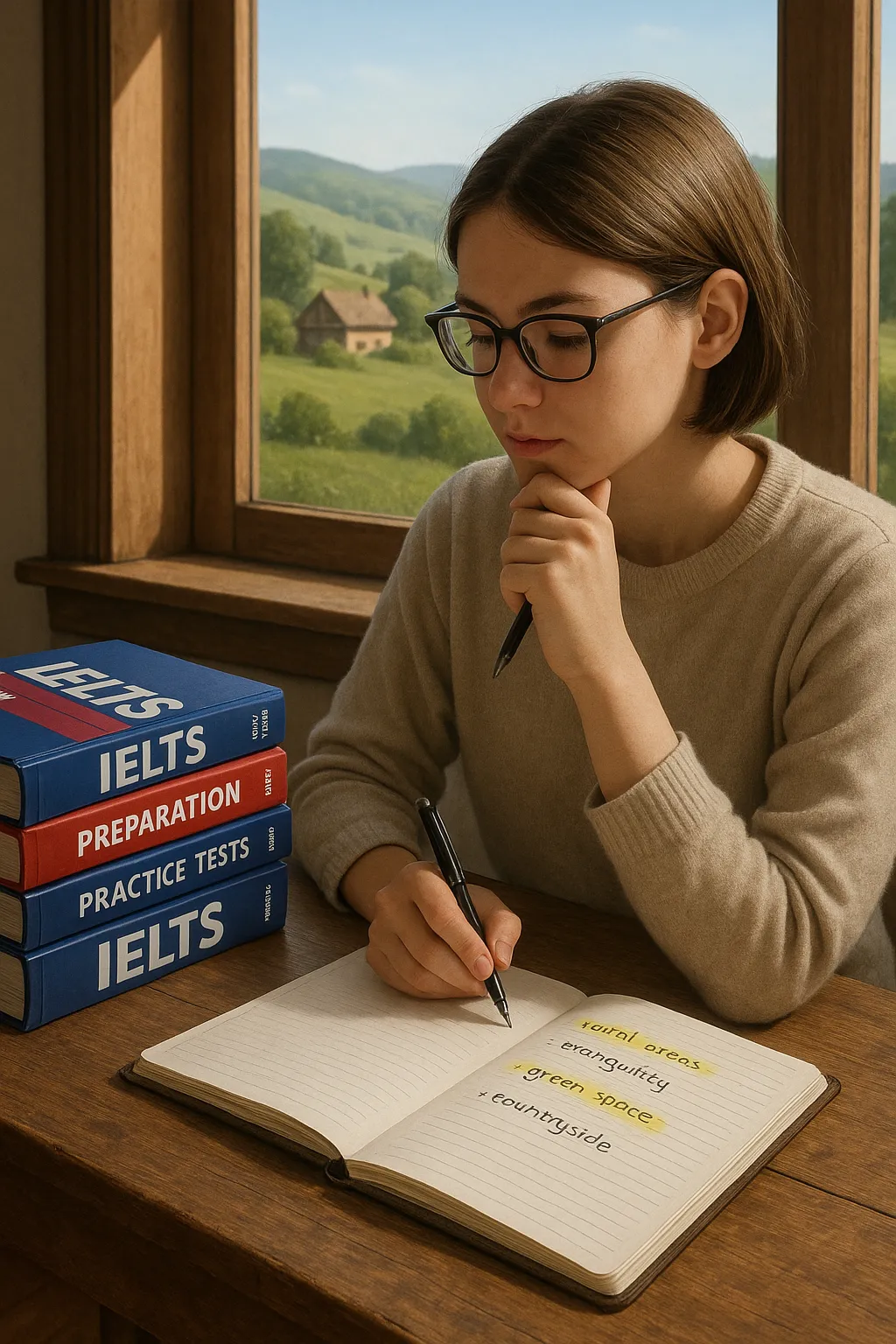
IELTS Speaking Part 1 – Sample Questions & Answers
Q1: Have you ever lived in the countryside?
A1: No, I haven’t actually lived in the countryside, but I’ve visited rural areas quite a few times. I was born and raised in a big city, so countryside life is quite unfamiliar to me. However, I do enjoy the peace and quiet whenever I get the chance to escape the city.
- Vocabulary:
- Rural areas (noun): countryside regions
- Countryside life (noun phrase): life in rural areas
- Peace and quiet (noun phrase): a state of tranquility and stillness
- Escape the city (verb phrase): to get away from urban life
Q2: What do you usually do when you visit the countryside?
A2: When I visit the countryside, I usually go for long walks, explore nature, and take photos. I also love trying local food, especially anything homemade. It’s a good time to slow down, breathe fresh air, and disconnect from technology for a while.
- Vocabulary:
- Long walks (noun phrase): extended walks
- Explore nature (verb phrase): to discover the natural world
- Take photos (verb phrase): to capture images
- Local food (noun phrase): regional cuisine
- Slow down (verb phrase): to adopt a more relaxed pace
- Breathe fresh air (verb phrase): to inhale clean, unpolluted air
- Disconnect from technology (verb phrase): to take a break from digital devices
Q3: What do you like most about the countryside?
A3: What I enjoy the most is the tranquility. The air is fresher, the surroundings are greener, and life feels less rushed. I also like the sense of community in small towns and villages—it’s quite different from the busy and sometimes impersonal city life.
- Vocabulary:
- Tranquility (noun): calmness and peace
- Surroundings (noun): the environment around you
- Sense of community (noun phrase): a feeling of belonging to a group
- Impersonal city life (noun phrase): urban life that feels cold or detached
Q4: Would you like to live in the countryside in the future? Why or why not?
A4: I think I would, but maybe only when I’m older. At this stage in my life, I prefer the convenience and opportunities of the city. But later on, I can see myself living somewhere peaceful in the countryside where I can relax and enjoy a slower pace of life.
- Vocabulary:
- Convenience and opportunities (noun phrase): ease of access and career/life prospects
- Peaceful (adjective): calm and quiet
- Slower pace of life (noun phrase): a less hurried lifestyle
IELTS Speaking Part 2 – Sample Answer
Describe a memorable experience you had in the countryside.
You should say:
- when and where it happened
- what you were doing
- who you were with
- and explain why it was a memorable experience.
Sample Answer:
One memorable countryside experience I had was when I visited Bicester Village in the UK about seven years ago. To be honest, it’s not like a traditional English village with farms, cottages, or open fields. Instead, it’s a luxury shopping outlet located in a rural area of Oxfordshire. Compared to places like the Cotswolds, which have a classic countryside charm, Bicester Village is more modern and commercial, though still surrounded by peaceful countryside views.
I went there with a group of friends during the summer. Our main activity was, of course, shopping. I remember being especially excited about buying a pair of designer shoes from Ted Baker, which were on sale. The staff were super friendly and the atmosphere was surprisingly relaxing for a shopping centre. Even though it was a popular spot, it didn’t feel overcrowded like shopping malls in big cities.
What made the experience so special was the unique combination of nature and shopping. We could walk outdoors between beautifully designed boutiques, enjoy the fresh air, and find a wide range of high-end brands like Gucci, Burberry, and Coach at discounted prices. There were also nice cafés where we stopped for coffee and had some light snacks.
Overall, it was a really enjoyable day, blending a countryside setting with a modern shopping experience—something I had never experienced before.
- Vocabulary:
- Bicester Village (proper noun): a famous shopping destination in the UK
- Traditional English village (noun phrase): a classic, historic village in England
- Open fields (noun phrase): large, undeveloped areas of land
- Luxury shopping outlet (noun phrase): a center for high-end discounted goods
- Rural area (noun): countryside
- Classic countryside charm (noun phrase): the traditional, appealing quality of rural life
- Peaceful countryside views (noun phrase): calm, scenic rural landscapes
- Designer shoes (noun phrase): high-fashion footwear
- Relaxing (adjective): soothing and stress-free
- Overcrowded (adjective): filled with too many people
- Beautifully designed boutiques (noun phrase): aesthetically pleasing small shops
- Fresh air (noun phrase): clean, outdoor air
- High-end brands (noun phrase): luxury labels
- Discounted prices (noun phrase): reduced costs
- Light snacks (noun phrase): small, quick meals
- Countryside setting (noun phrase): a rural location
- Modern shopping experience (noun phrase): a contemporary way of shopping
IELTS Speaking Part 3 – Sample Questions & Answers
Q1: What are the main differences between living in the countryside and in the city?
A1: One major difference is the pace of life. In the countryside, things are generally slower and more relaxed, while cities are busy and fast-paced. Another difference is the environment—rural areas usually have cleaner air, more green space, and less noise. However, cities tend to offer better infrastructure, job opportunities, and entertainment options.
- Vocabulary:
- Pace of life (noun phrase): the speed at which one lives
- Fast-paced (adjective): moving or changing very quickly
- Environment (noun): the surroundings or conditions
- Green space (noun): parks or natural areas
- Infrastructure (noun): basic physical systems like roads and utilities
- Job opportunities (noun phrase): employment prospects
- Entertainment options (noun phrase): leisure activities
Q2: Why do many people prefer to live in cities rather than rural areas?
A2: I think most people choose cities because they offer more convenience. You have easy access to schools, hospitals, public transport, and a wider range of job prospects. For younger people especially, cities provide more chances for career growth and social life, which rural areas often lack.
- Vocabulary:
- Convenience (noun): the state of being easy to use or access
- Easy access to (noun phrase): the ability to reach services easily
- Job prospects (noun phrase): future employment potential
- Career growth (noun phrase): professional advancement
- Social life (noun phrase): time spent with friends and community
Q3: Are cities better places to raise children than the countryside? Why or why not?
A3: That depends. Cities can offer better education and healthcare for children, which is a big advantage. But the countryside might be better in terms of safety, cleaner air, and space for kids to play. Personally, I think a balance is ideal—living in a quieter suburb that’s close to the city might offer the best of both worlds.
- Vocabulary:
- Education and healthcare (noun phrase): schooling and medical services
- Safety (noun): freedom from danger
- Cleaner air (noun phrase): less polluted air
- Space for kids to play (noun phrase): room for children to be active
- Balance is ideal (noun phrase): a perfect middle ground
- Quieter suburb (noun phrase): a residential area outside the city center
- Best of both worlds (idiom): a situation where you can enjoy the advantages of two very different things
Q4: Do you think rural areas will become more like cities in the future? Why or why not?
A4: Yes, I think so. With technology developing rapidly, even rural areas are getting better internet, transportation, and access to services. Over time, the gap between city and countryside might shrink, especially as remote work becomes more common and people start moving away from cities.
- Vocabulary:
- Developing rapidly (verb phrase): growing or improving quickly
- Transportation (noun): methods of travel
- Access to services (noun phrase): the ability to use public or private facilities
- Shrink (verb): to become smaller or less significant
- Remote work (noun): working from home or outside a traditional office




 Khai giảng Khóa học Hè cực HOT.
No comments yet!