


Tóm Tắt Nội Dung Bài Viết
The topic of gender roles is a frequent feature in IELTS Writing Task 2, particularly in the form of opinion essays or discussion essays. This subject encompasses issues such as gender equality, the roles of men and women in society, the workplace, education, as well as within the family and child-rearing.
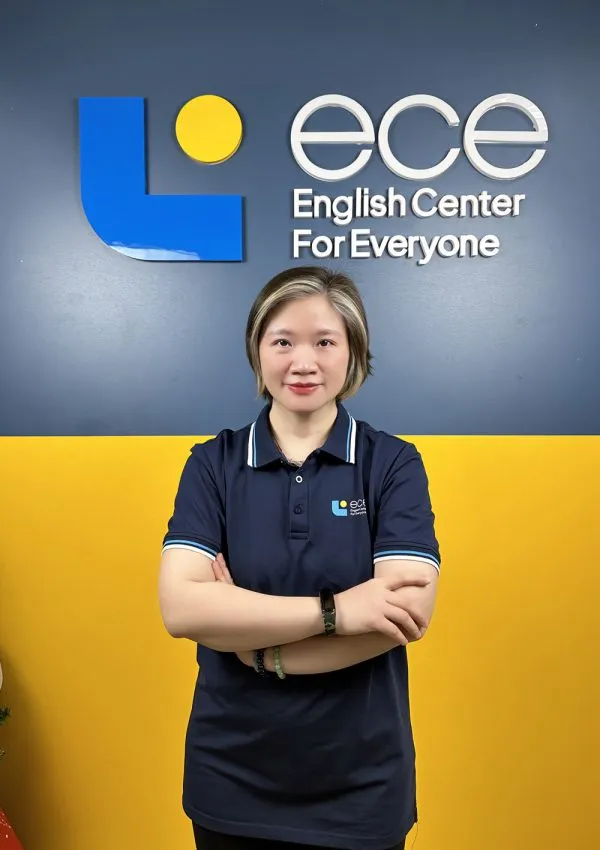
This article, compiled by Ms. My Ly – an 8.0 IELTS instructor at ECE Language Center, provides a comprehensive overview of the gender roles topic, including common question types, a synthesis of ideas, and high-quality sample essays.
Common Question Types for Gender Roles in IELTS Writing Task 2
To excel in IELTS Writing Task 2 on the topic of gender roles, mastering the different question types is essential. Below are common question formats with illustrative examples:
Opinion Essays (Agree/Disagree)
This type of essay requires you to present your opinion, agreeing or disagreeing to a certain extent with a given statement.
- Example 1: “Some people believe that men and women are equal and should be treated the same in all aspects of life, including work. To what extent do you agree or disagree?”
- Example 2: “Women should be allowed to join the military just like men. Do you agree or disagree with this statement?”
- Example 3: “Some argue that housework should be equally divided between men and women. Do you agree or disagree?”
Discussion Essays
This type of essay requires you to discuss both opposing views on an issue and then provide your own opinion.
- Example 1: “Some people think that both men and women should share the responsibilities of childcare equally, while others believe that women are better suited for this role. Discuss both views and give your own opinion.”
- Example 2: “Many believe that gender roles are determined by society, while others think they are natural. Discuss both views and give your opinion.”
- Example 3: “Some people think that single-gender schools are better for children, while others believe co-educational schools offer more benefits. Discuss both views and give your opinion.”
Problem-Solution Essays
This type of essay requires you to analyze issues related to the topic and propose solutions.
- Example 1: “Despite efforts toward gender equality, women are still underrepresented in leadership positions in many companies. What problems does this cause, and how can these issues be addressed?”
- Example 2: “In some parts of the world, girls still have limited access to education compared to boys. What are the reasons for this, and what can be done to solve the problem?”
Advantages/Disadvantages Essays
This type of essay requires you to present the advantages and disadvantages of a specific issue.
- Example 1: “Some companies have introduced gender quotas for hiring or promoting women. What are the advantages and disadvantages of this approach?”
- Example 2: “Allowing men to take paternity leave has become more common in recent years. What are the advantages and disadvantages of this development?”
Synthesis of Ideas for the Gender Roles Topic
To construct a coherent and insightful essay, you need a rich and diverse set of ideas. Below is a summary of key points categorized by different aspects of gender roles:
Gender Equality in the Workplace
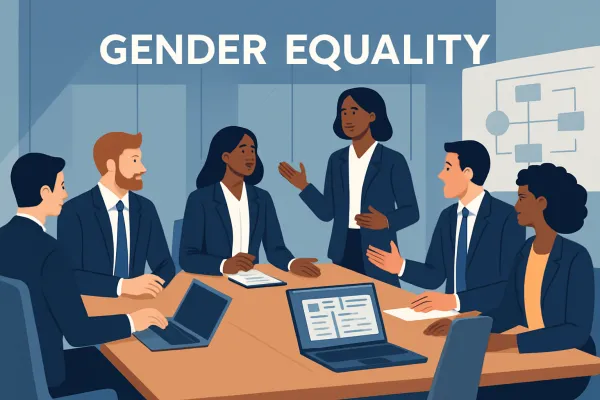
1. Arguments for gender equality:
- Men and women can work equally effectively if provided with fair training, education, and development opportunities.
- Gender-diverse work environments bring a wider range of perspectives and more creative problem-solving abilities.
- Anti-discrimination laws help women access equal career opportunities.
- Women can be highly effective leaders in business and politics (e.g., female CEOs, prime ministers).
2. Counter-arguments/Alternative views:
- Some jobs requiring high physical strength (e.g., construction, firefighting) may be better suited to men.
- In many cultures, traditional gender norms still influence career choices and leadership roles.
Gender Roles in the Family
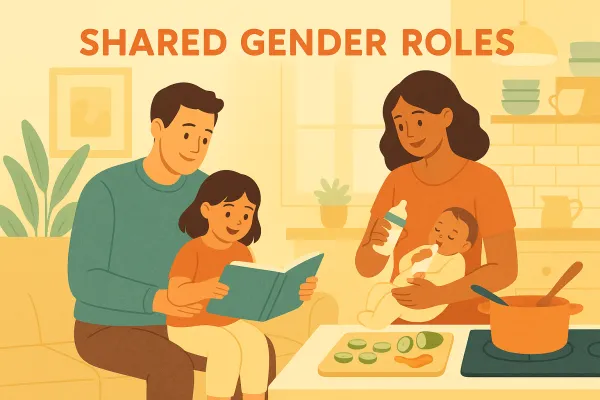
1. Modern perspective:
- Both men and women should share responsibilities such as childcare and housework.
- Women do not necessarily have to stay home to raise children, and men are not required to be the sole breadwinners.
- Shared responsibility promotes a better work-life balance.
2. Traditional perspective:
- In many societies, the belief persists that women should focus on child-rearing.
- Men are expected to be the financial providers, which may limit their involvement in domestic tasks.
Gender and Education
1. Key ideas:
- Students should not be steered or limited in their subject choices based on gender (e.g., girls can study engineering, boys can study nursing).
- Schools should encourage gender-neutral career guidance, ensuring students choose based on aptitude and interest.
- Ensuring equal access to education for both genders is essential at all levels.
Gender Discrimination
1. Negative impacts:
- Hinders women’s career development.
- Reduces diversity and innovation in the workforce.
- Causes social imbalance and slows economic progress.
2. Solutions:
- Enforce strict gender equality laws and policies.
- Raise awareness through education and media.
- Support women through training, mentorship, and leadership development programs.
Gender Stereotypes
1. Examples:
- Stereotypes such as “men are good at math” or “women are natural caregivers” are outdated.
- These ideas limit children’s aspirations and self-confidence.
2. How to overcome:
- Early education to teach children that gender does not determine capability.
- Use media and education to challenge and change social attitudes.
Sample Essay: Women’s Role in Police and Military Forces
Prompt: Some people believe that women should play an equal role as men in a country’s police force or military force, such as the army, while others think women are not suitable for these kinds of jobs. Discuss both views and give your opinion.
Analysis: This is a discussion essay, requiring you to discuss two opposing views on whether women should participate equally in police or military forces, and then provide your own opinion.
Key ideas:
- View 1: Women should play an equal role
- Gender equality is a fundamental human right.
- Jobs should be based on merit, not gender.
- Women can excel in strategy, communication, and leadership.
- Modern warfare and policing rely more on technology than just physical strength.
- Many successful examples of female police officers and soldiers worldwide.
- View 2: Women are not suitable for these jobs
- Combat roles require superior physical strength and stamina.
- Mixed-gender units may face distractions or reduced cohesion.
- Traditional roles limit women in these professions.
- Women may struggle to balance family responsibilities with demanding careers.
- Higher risk of injury for women in harsh environments.
Sample Essay:
When the issues of women’s participation in the police and military come into view, there exist conflicting opinions. Many people hold the belief that women ought to have equal opportunities to serve in the armed forces, while others strongly object to it. Each side has its own merits, which will be outlined below.
On one hand, women should inarguably play an equal role as men in a country’s police force or military because gender equality is a fundamental human right that extends to all professions. Modern security challenges require a diverse set of skills, including strategic thinking, emotional intelligence, and effective communication, areas in which women often demonstrate exceptional aptitude, sometimes even surpassing their male counterparts. Moreover, advances in technology have diminished the emphasis on physical strength and made it possible for women to perform tasks traditionally dominated by men. For example, robots can handle bomb disposal or hazardous material detection, roles that once required significant physical risk and strength. Women in the modern world demonstrate technical expertise and the ability to supervise and control these robots. What can be inferred from this is that allowing women to serve equally not only enhances operational effectiveness by introducing different perspectives but also promotes a more inclusive and progressive society.
On the other hand, some maintain that women are not suitable for police or military roles primarily due to the physically demanding nature of these professions. Combat and frontline duties often require exceptional strength, stamina, and resilience, attributes that men typically exhibit to a greater extent due to inherent biological differences. Critics also contend that mixed-gender units might face challenges such as distractions, compromised cohesion, or even sexual harassment issues, which could undermine operational efficiency. Additionally, traditional societal roles often place the burden of childcare and family responsibilities on women, making it difficult for them to commit fully to the rigorous schedules and deployments common in these fields.
In conclusion, while there are valid arguments on both sides regarding women’s inclusion in police and military roles, I firmly believe that gender should not be a barrier to service. Women who meet the same rigorous standards as men deserve equal opportunities to contribute to national security. Embracing gender equality not only reflects modern societal values but also strengthens the effectiveness of these forces through diversity and inclusivity.
Vocabulary Glossary:
- armed forces: military organizations
- exceptional aptitude: outstanding natural ability
- surpassing: exceeding or outperforming
- technical expertise: specialized technical knowledge
- operational effectiveness: how well a task is performed
- inclusive and progressive society: a society that embraces diversity and moves forward
- physically demanding nature: requiring significant physical effort
- attributes: qualities or features
- compromised cohesion: weakened unity or teamwork
- deployments: the movement of troops or equipment to a specific location for duty
- embracing: accepting or adopting willingly
I hope this article by Ms. My Ly has provided you with useful and comprehensive information regarding the gender roles topic in IELTS Writing Task 2. Regular practice with these ideas and high-quality samples will help you feel more confident when facing this type of prompt.
If you have any questions or would like to explore other IELTS Writing topics in more depth, please don’t hesitate to share!





 Khai giảng Khóa học Hè cực HOT.
No comments yet!