
Từ vựng & Bài mẫu IELTS Speaking topic Clothes/Fashion



Tóm Tắt Nội Dung Bài Viết
Từ vựng & Bài mẫu IELTS Speaking topic Clothes/Fashion


Tóm Tắt Nội Dung Bài Viết
Bạn có bao giờ nghĩ rằng chủ đề Clothes (Quần áo) là “dễ ăn điểm” nhất trong IELTS Speaking không? Thực tế là… không hẳn! Hầu hết thí sinh khi gặp chủ đề này chỉ quanh quẩn liệt kê: “I like t-shirts and jeans because they are comfortable”. Câu trả lời này không sai, nhưng nó quá an toàn và thiếu chiều sâu để đạt Band 7.0+. Giám khảo muốn nghe bạn nói về gu thẩm mỹ (taste), cách phối đồ (coordination) và sự phù hợp với hoàn cảnh (occasion).
Trong bài viết này, thầy Quốc Thịnh (giáo viên 8.5 IELTS tại ECE) sẽ giúp bạn “nâng cấp” tủ từ vựng của mình và học cách trả lời sao cho vừa tự nhiên, vừa “thời thượng” nhé!
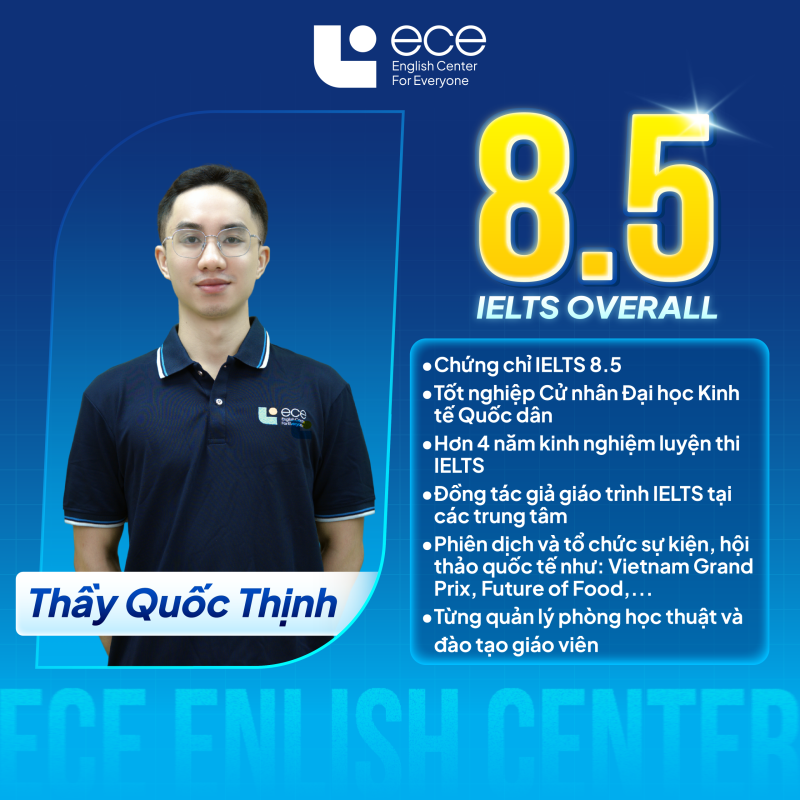
Thầy Đặng Quốc Thịnh – Giáo viên 8.5 IELTS tại trung tâm ngoại ngữ ECE
Nâng cấp từ vựng & Collocations chủ đề Fashion
Để nói về thời trang một cách sành điệu, bạn cần những từ vựng mô tả phong cách và cảm giác thay vì chỉ gọi tên quần áo.
Từ vựng & Cụm từ cốt lõi (Core Vocabulary)
| Từ / Cụm từ | Nghĩa tiếng Việt | Ví dụ minh họa |
| Comfy outfits | Trang phục thoải mái | I used to go for comfy outfits when I was a student. |
| Formal attire | Trang phục trang trọng | Formal attire is required at many workplaces. |
| Fashion trends | Xu hướng thời trang | Fashion trends influence how young people dress. |
| Mix and match | Phối đồ | She loves to mix and match colours. |
| Colour palette | Bảng màu | Blue is my main colour palette for special occasions. |
| Timeless style | Phong cách vượt thời gian (không lỗi mốt) | Classic suits are an example of timeless style. |
| Dress code | Quy định trang phục | Our office has a business dress code. |
| Wardrobe | Tủ đồ (bộ sưu tập quần áo) | Many people build their wardrobe slowly over time. |
Các Idioms & Expressions giúp bài nói tự nhiên
-
Dress to impress: Ăn mặc để gây ấn tượng (với người khác).
-
Fashion-conscious: Là người quan tâm/ am hiểu thời trang.
-
Look presentable: Trông chỉnh chu, lịch sự (đủ để ra đường hoặc đi làm).
-
Go-to outfit: Bộ đồ “tủ” (mặc thường xuyên vì thích).
-
Mix things up: Thay đổi cho mới lạ (không bị nhàm chán).
Cách trả lời IELTS Speaking Part 1 chủ đề Clothes
Trong Part 1, các bạn hãy cố gắng mở rộng câu trả lời bằng cách so sánh thói quen quá khứ – hiện tại hoặc đưa ra lý do cụ thể.
Q1: What kinds of clothes do you prefer to wear?
There has been a noticeable change in the last few years. When I was still a student, I would go for comfy outfits for a fresh and active look. T-shirts paired with jeans and sneakers was my favourite outfit back then. However, I have a full-time office job now, so formal clothes are part of the requirements — that means shirts and trousers every working day.
Q2: Do you spend a lot of time deciding what to wear?
Yes. Fashion is one of my interests, so I often put a lot of thought into planning my outfits. It usually takes me a while to consider which items go well together. Sometimes I even make last-minute changes based on intuition.
Q3: Do you think fashion is important when choosing clothes?
It is hard to deny that fashion trends have a significant influence on how people choose their clothes. For example, people have been hunting for half-zip polos to add to their wardrobes since they became a trendy item during last year’s autumn–winter season. However, I also think some styles are timeless and not affected by trends — classic suits for men, for instance.
Q4: Did you wear a uniform at school?
In Vietnam, it is compulsory for students to wear a school uniform, which is understandable. The purpose is to bridge background differences between students and create a more equal and harmonious learning environment. Additionally, it helps build a sense of unity.
Bài mẫu Part 2: Describe clothes you wear on special occasions
Đề bài:
Describe clothes you wear on special occasions.
You should say:
-
What they are
-
Where you buy them
-
Why you wear them
-
And what people think about them
Bài mẫu tham khảo (Band 7.5 – 8.0):
There is this go-to outfit that I always choose whenever a special event comes up, whether it’s a wedding, a year-end party, or a graduation ceremony. It’s my favourite formal fit, which consists of a shirt and a jacket. The main colour theme is blue — different shades of blue — because it’s my favourite colour and, in my opinion, it looks great on me and creates a perfect mix of fresh and classic.
For the lower part, I have more options. I can pair it with blue trousers or jeans, depending on whether I want a more formal or a more creative and youthful look. As for shoes, the choices are also varied. A safe option would definitely be a brown or black pair of derby shoes. However, if I want to add a highlight to the outfit, a pair of Nike skate shoes can do the job. That’s what I love about this fit — I can always be creative with it and make small changes that give off a new vibe.
I didn’t buy all the items at once. In fact, I purchased each piece here and there over the years. The feeling of discovering something new to add to the outfit never fails to intrigue me.
The reason why I wear this outfit so often is not only because I personally think I look good in it, but also because people never hesitate to compliment how well it suits my shape and vibe. So it always feels nice to put these items on.
IELTS Speaking part 3: Fashion & Society
Q1: What factors influence the clothes we choose to wear?
I think there are two main factors. First, ongoing fashion trends undeniably influence how people buy and wear their outfits. These days, people’s shopping behaviour is heavily driven by advertisements in the media, and marketing teams from fashion brands use this strategically to boost sales. Secondly, clothes should be appropriate for different occasions — for example, formal events like weddings generally require more formal attire.
Q2: Is it possible to look good without spending a lot of money on clothes?
Absolutely. Affordable clothes can work wonders as long as the wearer knows how to combine pieces properly. They should understand which colours complement each other, which ones clash, and which shapes or materials work best to create a fresh look out of inexpensive items.
Q3: Do fashion shows influence what we wear?
From my observation, clothes featured on fashion shows are quite unique — sometimes even a bit peculiar — and not commonly seen on the streets. Such styles are mostly worn by celebrities or fashion enthusiasts. A more influential driver of everyday style is actually TV shows or sitcoms, where the items featured look more familiar, wearable, and still trendy.
Tổng kết lại, chủ đề Clothes & Fashion là cơ hội tuyệt vời để bạn thể hiện cá tính riêng. Đừng ngại nói về những sở thích phối đồ (mix and match) hay quan điểm về xu hướng (trends) của bạn. Qua bài mẫu của thầy Quốc Thịnh, chúng ta thấy rằng một câu trả lời điểm cao không cần phải mô tả những bộ cánh đắt tiền, mà nằm ở khả năng diễn giải tại sao bạn chọn nó và cảm giác nó mang lại cho bạn. Hãy tự tin thể hiện phong cách của mình nhé! Chúc các bạn ôn tập hiệu quả cùng ECE!

Đoàn Nương
Tôi là Đoàn Nương - Giám đốc trung tâm ngoại ngữ ECE. Tôi hiện đang là giảng viên của khoa ngôn ngữ các nước nói tiếng Anh - Trường Đại Học Quốc Gia Hà Nội. Tôi đã có 19 năm kinh nghiệm giảng dạy IELTS và 15 năm là giảng viên Đại Học. Tôi mong muốn đưa ECE trở thành trung tâm ngoại ngữ cho tất cả mọi người, mang tới cho học viên môi trường học tập tiếng Anh chuyên nghiệp và hiệu quả.
Tìm hiểu các khóa học tại ECE
Tin Tức Cùng Danh Mục

Gravity IELTS Reading – Giải mã bài đọc về trọng lực
Bài mẫu IELTS Speaking part 1, 2, 3 topic beauty

Bài mẫu IELTS Speaking part 1, 2 & 3 topic Relationships

IELTS Speaking topic Fashion: Từ vựng & bài mẫu full 3 parts
IELTS Speaking topic chocolate: Từ vựng & bài mẫu part 1, 2, 3
Các tin liên quan
Gravity IELTS Reading – Giải mã bài đọc về trọng lực
Bài mẫu IELTS Speaking part 1, 2, 3 topic beauty
Bài mẫu IELTS Speaking part 1, 2 & 3 topic Relationships
IELTS Speaking topic Fashion: Từ vựng & bài mẫu full 3 parts
IELTS Speaking topic chocolate: Từ vựng & bài mẫu part 1, 2, 3
IELTS Speaking topic building: Từ vựng, bài mẫu part 1, 2, 3

Từ vựng và bài mẫu IELTS Speaking topic Memory chi tiết
IELTS Speaking topic Flowers: Từ vựng & bài mẫu chuẩn 3 part

Company Innovation IELTS Reading: Từ vựng & đáp án chuẩn

Willpower IELTS Reading – Từ vựng & đáp án chuẩn

Giải mã bài đọc Making time for science IELTS Reading chi tiết A – Z

The Great Fire of London IELTS Reading: Từ vựng & đáp án chi tiết




Lượt Đăng Ký

NHẬN TƯ VẤN NGAY
Vui lòng để lại thông tin để được tư vấn chi tiết lộ trình học và thi IELTS ở trên
